Executive Summary
Water
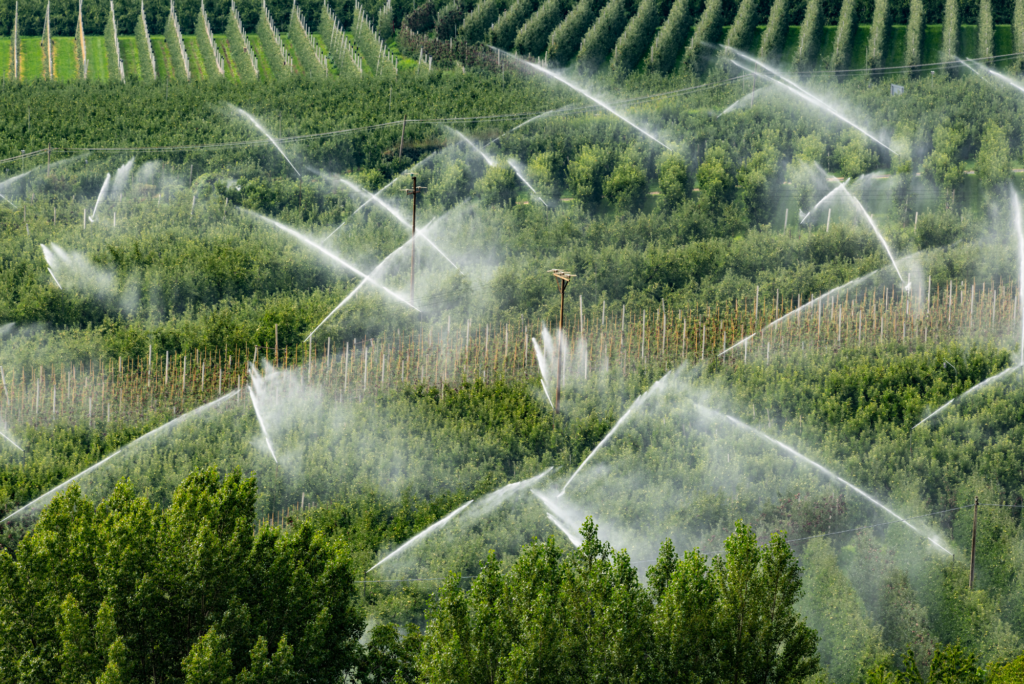
Water scarcity is a prevailing condition in many Mediterranean countries, while ongoing and anticipated changes in climate conditions are likely to exacerbate this challenge. The western and central Mediterranean countries are characterised by markedly higher water availability than in the southern and eastern parts of the Basin where water for agriculture is the dominant consumer of available water (up to around 80%). The Mediterranean region has become highly urbanised, and urban structures face particularly severe challenges including increased warming compared to surrounding rural areas caused by the ‘heat island effect’ and increased demand for potable water for human consumption and the upkeep of green spaces in cities. Effective adaptation measures at the local to regional level are necessary to address these difficulties and lower the likelihood of local communities being forced to migrate (medium to high confidence). {3.1}
Food
Environmental change will induce adverse impacts on the agriculture and fisheries sectors. This will mainly be caused by longer-lasting and increasingly intense marine and terrestrial heat waves, as well as droughts and floods on land (medium to high confidence). These impacts will likely involve reduced farm and fisheries productivity and, in combination with non-climatic drivers of change, an exacerbation of risks to food security (domino effect). These trends apply to the entire Mediterranean Basin, with greatest challenges foreseen for southern and eastern Mediterranean countries (high confidence). {3.2}
Health
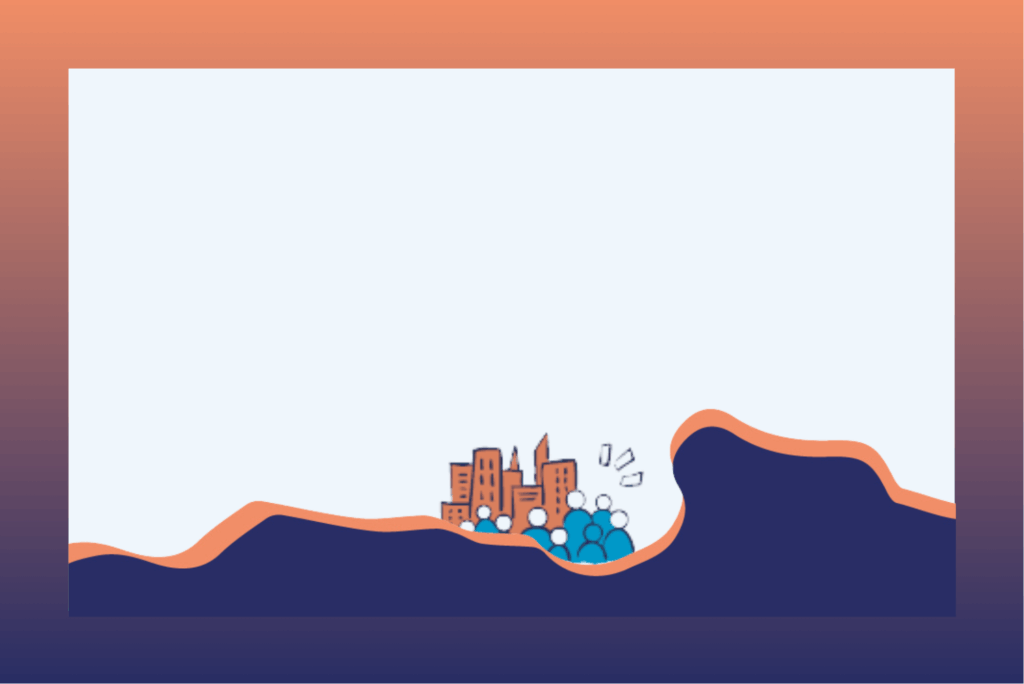
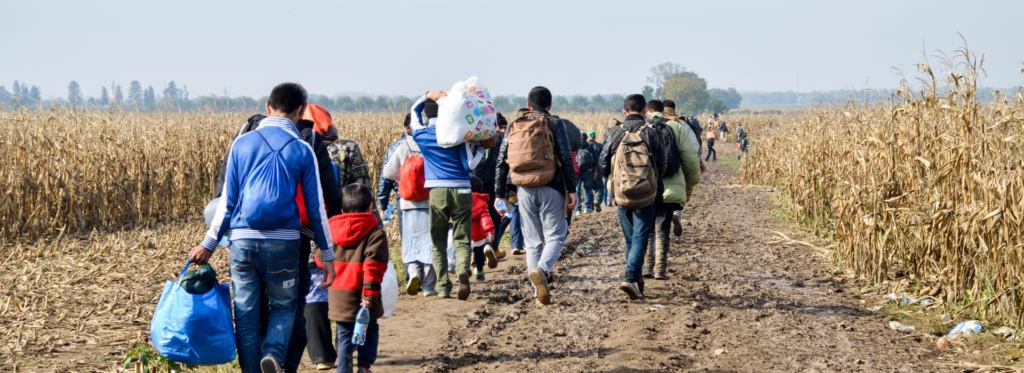
Conflicts and human migration, driven by a combination of climate-related and non-climate related factors, have significant implications for public health in the Mediterranean Basin. Conflicts beyond the Mediterranean region (i.e. Ukraine) can have indirect consequences for the health of Mediterranean populations, for example with regard to the provision of food or other essential daily life items. People living in conflict zones in the Mediterranean (such as Gaza or Syria), as well as refugees and immigrants arriving at their destination in Mediterranean countries from inside and outside the Mediterranean, experience disproportionately high rates of poverty and endure inadequate living conditions. This includes substandard housing, contaminated water, and insufficient healthcare facilities. Such poor conditions result in risks to human health and represent hotspots for outbreaks of infectious diseases. People living in conflict zones, as well as refugees and migrants, are also vulnerable to poorer mental health. The treatment of mental illnesses among both adult and child refugees, together with child malnutrition, are frequently neglected. The elderly, the chronically ill, people who work outdoors, and those from low-income backgrounds are particularly susceptible. {3.3}
Coasts
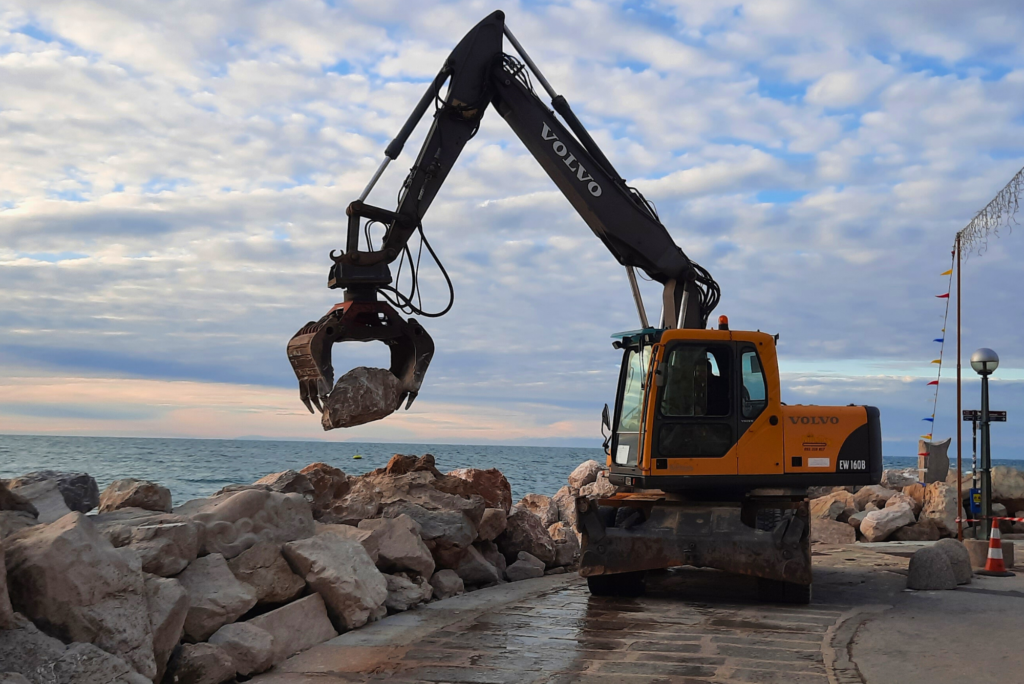
Sea level rise will increase the frequency and intensity of already existing coastal hazards such as flooding due to extreme sea levels, beach erosion and saltwater intrusion into soils and aquifers (high confidence). The impacts of these hazards will be exacerbated by future socio-economic developments in the coastal zone (e.g. population growth or decline, urbanisation levels and expansion, asset and critical infrastructure development) (high confidence). {3.4}
Ecosystems
The Mediterranean’s terrestrial, marine, and freshwater ecosystems are predicted to be adversely affected by environmental change. Forests are expected to experience increased drought, heat stress, wildfires, and pest vulnerability, while forecasts for freshwater ecosystems suggest that they will encounter declining water availability and the drying out of lakes. In marine ecosystems, increased sea-surface temperatures are likely to affect plankton availability and favour the occurrence of tropical invasive species, hence disrupting food chains. These impacts will be exacerbated by additional anthropogenic activities, including intensive agriculture, industrial development, and fisheries exploitation. Provisioning ecosystem services, including those associated with timber and non-timber forest products and fisheries, will decline. These trends have the potential to result in displacement, as communities may need to seek alternative livelihood opportunities (medium to high confidence). {3.5}
Energy
Extreme weather conditions affect conventional energy production operations such as coal mining and oil and natural gas exploitation. Power plants may need to be modified to run at lower temperatures with lower efficiency if they rely on water bodies for their cooling needs. Extreme weather conditions also alter and affect the renewable energy production of solar photovoltaic systems, wind turbines, hydroelectric plants, and biomass production. Transportation networks, including those for electricity and conventional fuels, are expected to be impacted by climate change. Rising temperatures and erratic wind patterns are a clear threat to overhead cables and pylons used in the transmission of power. Environmental change will therefore have an impact on living conditions at the local to regional level, potentially resulting in decreased energy security for the vast majority of local populations due to increased needs for space cooling or devastating storm events. {3.6}
Interactions between sectors
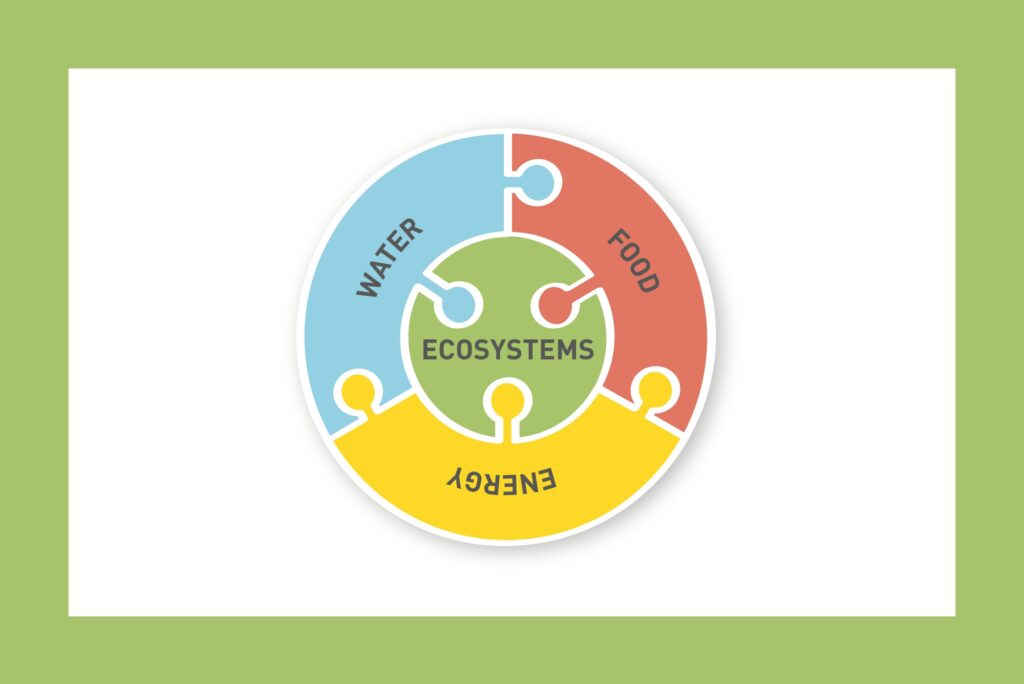
Several sectors (i.e. water, food, health, coasts, ecosystems and energy) are affected by both environmental changes and socio-economic changes across the Mediterranean region (high confidence). The impacts on these sectors are highly interconnected (Figure 3.11), therefore resulting in compounding stresses on human livelihoods. The interaction of impacts across sectors, and their compounding effects, may potentially trigger conflict and migration across the region (medium confidence). {3.7}
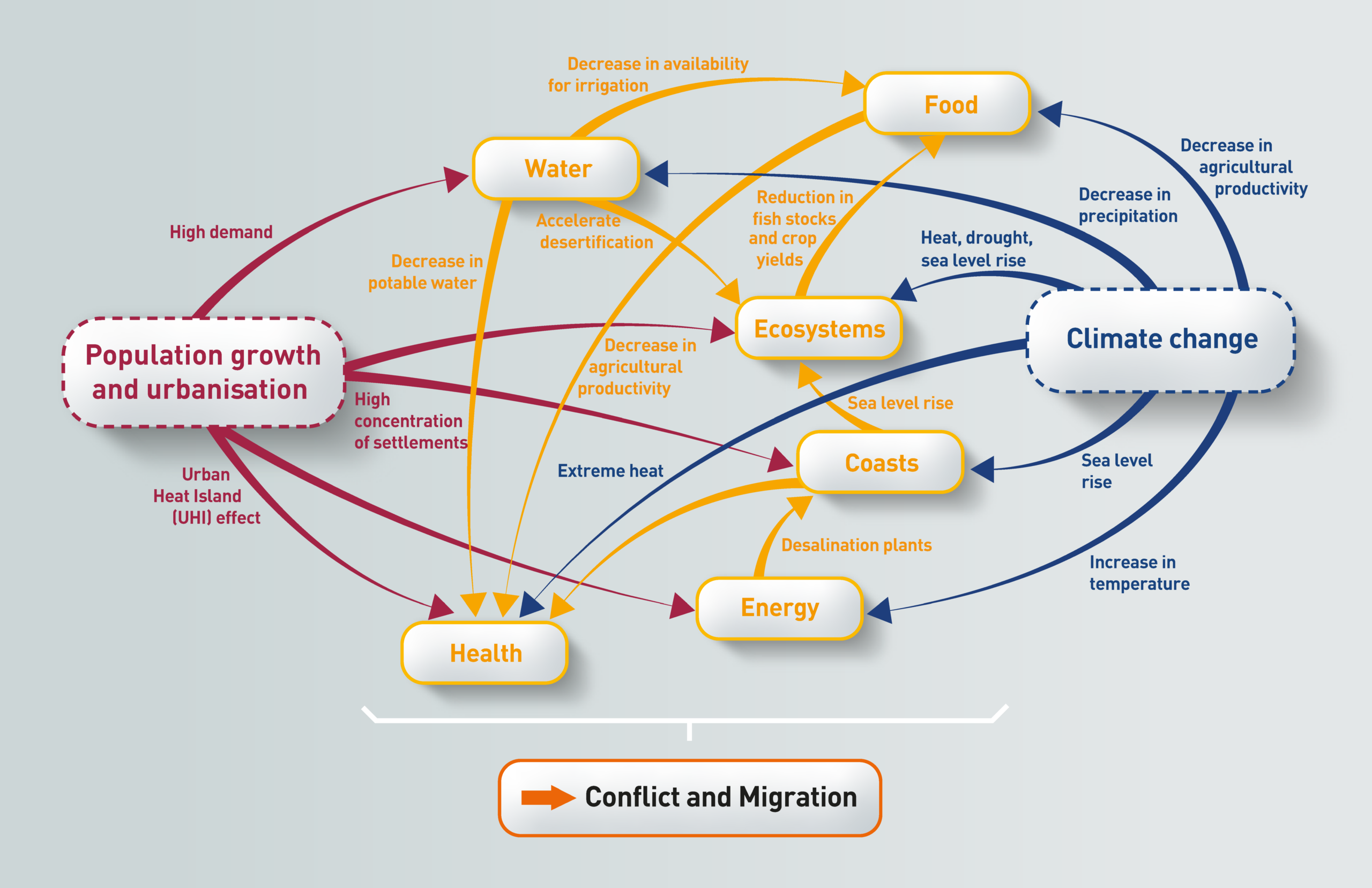
Links between climate change and socio-economic changes and their consequences for the individual sectors (Figure 3.12, Section 3.7 Interactions between sectors).
How to cite the report
Contributors
Coordinating Lead Authors

Lead Authors