Table of contents
Key highlights
Background and general framework
Human mobility and the search for better or safer living conditions for individuals, communities, and substantial segments of the population have been common throughout much of the history of the Mediterranean (and elsewhere). The number of people crossing the Mediterranean Sea[1] and arriving in host countries, primarily on the northern shores, has fluctuated a great deal over the last decade, between a maximum of about 1 million in 2015 and a minimum of around 95,000 in 2020[2]. In 2023, approximately 270,000 people arrived in the Mediterranean Basin, coming mainly from the African continent and the Middle East and Western Asia. However, most migrants from these regions move internally within a given country, from rural areas to towns and cities (internal migration). When moving across borders to neighbouring or more distant states (external migration), migrants also prefer to seek shelter in urban settings. The variation in arrival numbers is due to a number of factors, including the general political situation in the region that is the ability of migrants to move away from their home country without restriction, and to cross national borders before reaching the main points of departure for Europe. Recently introduced strict border controls on the European Union’s southern flank are important obstacles to migrants aiming to enter Europe. This includes bilateral and multilateral agreements between receiving European Union (and other) countries, eastern European/Mediterranean countries, and the Mediterranean countries of North Africa, from where migrants start their journey across the Mediterranean Sea[4, See, for example, McAuliffe & Oucho (eds.), World Migration Report 2024 (IOM, Geneva). https://publications.iom.int/books/world-migration-report-2024]. Migrants who manage to reach the Mediterranean coast often aim to reach a European country, despite the life-threatening conditions associated with crossing the Mediterranean Sea in largely unseaworthy boats. Between 2014 and 2024, more than 30,000 people have been recorded dead or missing at sea5. This represents a humanitarian tragedy that calls for urgent political measures and action from decision-makers at national, international, and European Union levels.
The reasons for migration and the fate of migrants[6] in the Mediterranean and its rim countries have been a matter of debate at national and international levels for the last few decades. Understanding the underlying reasons and motivations that compel people to take such risks may lead to a more rational basis for government policies and regulations.
Environmental and climate change[7] in countries of origin have often been cited among the many potential drivers for migration, including consequences on basic aspects of livelihoods, such as access to water and food security. Such deteriorating living conditions may leave individuals and communities little choice but to abandon their homes.
Conflicts and disputes over land and natural resources that turn violent, and politically driven conflicts in general, represent equally important driving forces for migration. Additionally, social and economic hardships, often interrelated with the aforementioned drivers, play important roles in prompting people to leave their homes.

Objective and scope of the Analysis
The core objective of this Analysis is to achieve a more comprehensive understanding of the nexus between environmental change, conflict, and migration, both presently and in the near future. The numerous linkages and feedback mechanisms between each of these drivers and migration are complex. Unravelling and determining verifiable and concrete relationships between all elements of the nexus remains a major challenge from both a conceptual and applied perspective.
The Analysis provides an updated review of environmental changes with an emphasis on their impacts on water, food and energy security, human health, and the environmental integrity of the Mediterranean region. Environmental changes are frequently quoted as primary causes of migration and the terms ‘environmental or climate migrants/ refugees’ are used to depict people thus affected. However, this Analysis highlights that other drivers frequently play a more important role in (primarily external) migration than environmental changes and their impacts. These include, in particular, conflicts and their devastating consequences, various socio-economic factors, different degrees of vulnerability of affected populations, as well as governance issues in a given country. The current scope of the Analysis has therefore been expanded to include these factors and achieve a more comprehensive understanding of the environmental change-conflict-migration nexus.
This Analysis assesses the current state of scientific knowledge in order to better understand the experiences and challenges of migrants in the Mediterranean, with the goal of supporting decision-makers in creating effective policies aimed at improving the lives of those affected by migration and minimising the adverse consequences of human (im-)mobility in the Mediterranean. The Analysis applies the concept of the environmental change-migration-conflict nexus in order to develop integrated policy measures, which are derived through multi-stakeholder engagements. However, deficiencies in quantifying the linkages between the elements of this nexus result in significant challenges to devising appropriate response mechanisms.
Despite numerous new advances in our understanding of the environmental change-conflict-migration nexus, a number of questions remain open. The complexity of the subject, driven by human desires, fears, and motivations that are difficult to quantify, poses a significant challenge. However, the Analysis offers several lessons intended to inform decision-makers in devising policies and programmes that address the root causes of the problems emanating from the environmental change-conflict-migration nexus rather than their symptoms. At the same time, avenues for future research that address climate science, social and economic behaviour, and geopolitics through a multi-disciplinary lens are proposed.
Results and conclusions
The complex interplay between climate change, conflict, and place-based vulnerability is particularly evident in the Mediterranean region[8], a well-documented hotspot of environmental stress and geopolitical instability.
First, the region faces multiple risks associated with environmental changes. Anthropogenic disturbances have severely affected the environmental integrity of marine and terrestrial ecosystems, as well as the well-being of local communities. Of particular concern is the issue of water stress, defined as water availability of less than 500 to 1000 m3 per inhabitant per year, a situation already experienced in all the southern and eastern Mediterranean countries. Anticipated changes in climate conditions will likely transform the region into a global ‘drought hotspot’, with substantial adverse consequences for food security. Furthermore, rising sea levels, in combination with enhanced seawater intrusion, will render coastal aquifers unsuitable for human consumption and significantly reduce agricultural activities in countries that depend on them. The deterioration of Mediterranean freshwater, coastal, marine, and terrestrial ecosystems will result in a declining provision of a number of ecosystem services and therefore adversely affect human well-being.
Second, the region has historically been a hotspot for geopolitical conflict. The legacy of repeated foreign interventionism in the Middle East and North Africa (MENA) region since World War I, as well as more recent events and changes in political and socio-economic conditions since the end of the Cold War, have resulted in significant numbers of migrants fleeing their homes in search of safer shelter. The past two decades alone have seen the 2003 invasion and occupation of Iraq, the wave of popular uprisings known as the ‘Arab Spring’ in 2010 and 2011, and ongoing and violent conflicts in Libya, Syria, Yemen, and Palestine. The depth of the security and political challenges facing these states and societies have often overshadowed environmental disruptions, resulting in reduced attention and action to reduce the impacts of environmental changes in the region. Migrants from Syria, as well as Iraq, Afghanistan, and Sudan, represent a large proportion of the migrant flows towards neighbouring countries (Jordan, Lebanon, Türkiye) and the European Union. Persisting political instability and a lack of civil order in large parts of Libya and Tunisia have turned them into major departure points for refugees from large parts of the African continent attempting to cross the Mediterranean Sea towards Europe. Conflicts directly cause migration by creating intolerable levels of threat to the well-being of local residents. Indirect effects of conflicts, including reduced economic opportunities and the resulting lack of sufficient income, compel many individuals or families to relocate.
Conflicts increase the vulnerability of exposed societies to future environmental hazards and can lead to detrimental impacts on societal development in a given locale. It has been observed that conflicts often turn these hazards into disasters by amplifying risks and vulnerabilities across multiple institutional and temporal scales. Conversely, variations in environmental conditions, such as changes in climate conditions combined with more severe and frequent extreme events, may cause competition for natural resources between neighbouring regions that can turn to extreme violence. Increased scarcity of natural resources, and particularly water and food, can thereby amplify already existing challenges.
The current lack of effective governance structures, limited cross-border cooperation, and unsustainable policies add to this challenge. Developing and implementing effective adaptation plans and initiatives may help reduce the consequences of environmental changes on natural resources, food security, general livelihood, and health, and reduce the potential for economic loss. Such plans can also be instrumental to alleviating the risk of conflict, thereby addressing the linkages between the elements of the environmental change-conflict-migration nexus. Intersectional structural inequalities that already permeate Mediterranean societies and economies also need to be considered. These include significant economic disparities between Mediterranean Basin countries, differences in mobility between rural and urban areas, as well as the position and role of women in society. These factors largely shape the complex realities of environmental vulnerability, migration, and conflict in the Mediterranean.
Insufficient empirical data, methodological shortcomings, and difficulties in accessing relevant data and conducting empirical work represent significant obstacles. To develop realistic and effective policy measures, further interdisciplinary and cross-sectoral studies are indispensable. Effective governance needs to address a set of specific challenges to identify pathways towards sustainable adaptation. Involuntary migration in the Mediterranean as a form of adaptation to environmental changes has been identified as a coping mechanism of affected communities. However, coping strategies alone, instead of efficient adaptation measures, may increase risks and vulnerabilities to the impacts of environmental changes for migrants in the long run.
The narrative of migration and displacement induced by environmental change as a linear cause-effect relationship needs to be revisited. It is crucial to acknowledge region-specific push factors and diverse motivations for migration, which differ not only from one region to another but also amongst various groups of people and communities. The differences between internal and external migration are shaped by distinct socio-economic conditions and geopolitical forces. Furthermore, the decision to leave one’s home, livelihood, history, and culture is also shaped by the dangers involved in the journey (or at least a perception of them), its legality, and the risks migrants are prepared to take. A nuanced understanding of these complexities is crucial for research and policy domains, ensuring that the problem is approached with the necessary attention to its intricacies.
There is also an urgent need to shift the narrative around the environmental change-conflict-migration nexus from a security-focused frame of reference to one that emphasises opportunities for development and cooperation. A development-focused approach based on the engagement of all stakeholders can enhance social cohesion and reduce the tensions that may arise from competition over scarce resources.
Empirical evidence has established that the Mediterranean Basin is a climate change hotspot. Climate action in the Mediterranean, particularly in the southern and eastern countries, should therefore prioritise adaptation strategies and programmes to build the resilience of vulnerable communities and develop climate-resilient solutions that enhance livelihoods, promote social equity, and mitigate vulnerability to climate impacts. From this perspective, exploring the potential of investments in green infrastructure, the water-energy-food nexus, and sustainable agriculture could contribute to job creation and local economic growth. Yet significant knowledge gaps remain in understanding and systematically developing evidence-based policies that link climate action with economic opportunities. This is particularly evident in marginalised communities that are often hit hardest by environmental change and extreme weather events. Limited fiscal resources, governance structures, and institutional capacities can make it difficult for these communities to cope with recurring and intensifying climate-related challenges, potentially influencing migration decisions.
Since the completion of the revisions of this expert assessment in 2024, various devastating conflicts have continued to affect the Mediterranean region with far-reaching humanitarian and environmental consequences. New analyses and data on their environmental consequences (destruction of agricultural lands, soil contamination, and damage to vital ecosystems) and forced displacement of populations are becoming available and will require updates of this assessment. We hope the MedECC Second Mediterranean Assessment Report (MAR2) and other assessments will depict the rapidly evolving realities and their cumulative impacts on the region’s environment, human security and well-being.
More in-depth qualitative research is needed to explore how community-driven climate initiatives and collaboration on joint management of scarce natural resources as common public goods can foster peaceful coexistence and shared prosperity, while building resilience to environmental change. There are a growing number of success stories documenting how community-driven climate projects can engage stakeholders to efficiently address local needs and build local capacities, which in turn enhances livelihoods, promotes social equity, and mitigates vulnerability to climate change.
Additional collaborative research is needed at the regional scale and across sectors and disciplines in the Mediterranean, bringing together environmental scientists, economists, sociologists, and local practitioners to develop an evidence-based regional vision on how the environmental change-migration nexus is contextualised in different sub-regions of the Basin. This interdisciplinary approach can enhance understanding of the development impacts of environmental change within the broader framework of the UN 2030 Agenda for Sustainable Development.
Regional collaboration among Mediterranean countries, inter-governmental bodies, and Basin-level initiatives across the Mediterranean cannot be overemphasised. They represent an important avenue for building a coherent approach to managing the climate, socio-economic, political, and developmental challenges around the Basin. Existing multi-stakeholder platforms enable joint initiatives and projects, which promote dialogue and collaboration on climate, environment, and migration.

A. Introduction
A.1 Background
A.1.1 Human mobility and the search for better or safer living conditions for individuals, communities and substantial segments of the population have been common throughout much of the history of the Mediterranean (and elsewhere). {5.1}
A.1.2 The Mediterranean represents an important transit and destination region for migrants from the African continent as well as from the Middle East and other parts of Western Asia. The number of people crossing the Mediterranean Sea and arriving in host countries, primarily on the northern shores, has fluctuated a great deal over the last The variation in arrival numbers is due to a number of factors, including the general political situation in the region that is the ability of migrants to move away from their home country without restriction and to cross national borders before reaching the main points of departure towards Europe. Stricter border controls and increased surveillance, as well as cooperation with countries of origin and transit (for example the EU–Türkiye agreement), represent important obstacles for migrants aiming to enter Europe. {2.5}
A.1.3 Most environmental migration is internal and over short distances, often from rural areas to towns and cities, although migration over longer distances and across national borders is observed. Most migrants from these regions move internally within a given country, from rural areas to towns and cities (internal migration). When moving to neighbouring or more distant states (external migration), migrants also prefer to seek shelter in urban Large inflow of migrants into host countries may reduce their adaptive capacity and put pressures on already stressed societies of the host countries. {1.1, 5.1}
A.1.4 There are numerous reasons for people or entire communities to migrate and leave their homelands. Sudden or persistent changes in environmental conditions, including extreme events and their consequences, and the impacts on livelihood and the availability of essential resources (e.g. water, food) represent important drivers for migration, particularly for internal displacements (medium to high confidence). (See also Section D.1) {1.1}
A.1.5 Emerging or existing conflicts and threats to well-being and physical integrity are important and lead to mostly involuntary conflict-induced People often move for economic, social and political reasons hoping to improve their economic prospects and living standards (medium confidence). (See also Section C.1) {1.1; 5.1}
A.1.6 The southern and eastern Mediterranean countries and the Arab region represent a particularly relevant case for conflict-induced displacements (medium confidence). {1.2}
A.2 Motivation and goals
A.2.1 This Analysis seeks to deepen understanding of the complex relationships between environmental change and migration in the Mediterranean region, by analysing their dynamics, trends, patterns, drivers and impacts through the nexus It aims to inform policy measures that minimise suffering, allocate resources effectively, and support the well-being of people and communities considering leaving their homes, voluntarily or involuntarily. This Analysis also identifies and assesses the policy dimensions, gaps, and challenges related to migrants and migration in the Mediterranean Basin. (See Introduction)
A.2.2 The interdependency and numerous mutual linkages and feedback loops between environmental change, conflict, and human migration make it very difficult to establish convincing and verifiable quantitative relationships between This presents a significant challenge for achieving a comprehensive understanding and for specifying policy guidelines and strategies. These interconnections are captured and analysed within the framework of the environmental change-conflict-migration nexus in the Mediterranean Basin. A better and more comprehensive understanding of this nexus represents the core focus of this Analysis. (See Introduction)

B. Drivers and their impacts on migration
B.1 The changing environment
B.1.1 In line with global trends, the Mediterranean region has warmed substantially over the last century, with higher and accelerated mean temperature trends over the last four decades, particularly in the eastern parts of the All Mediterranean sub-regions have warmed by up to 1.5°C and above, sometimes exceeding a 2°C increase since the pre-industrial era, which is significantly higher than the global rate (high confidence). {2.4}
B.1.2 In the Mediterranean, heat waves and droughts are expected to intensify in a warmer For heat waves, increases in severity, frequency and duration are a robust outcome across scenarios, modelling approaches and definitions. The region is also identified as a global hotspot for future droughts, with more frequent and severe events projected. In contrast, projections of extreme precipitation are less robust, with lower agreement across models, although individual rainfall events can reach unprecedented magnitudes. Observed increases in heat extremes can be attributed to human influence (high confidence). {2.4}
B.1.3 Extreme events affect the well-being of Mediterranean societies by causing casualties, property losses and having substantial impacts on ecosystems, agriculture, food production and water They also affect socio-economic sectors such as labour productivity, transportation, energy production and tourism (high confidence). {2.4}
B.1.4 Surface temperatures of the Mediterranean Sea increased by about 1.5 °C between 1982 and 2018, with particularly strong warming in the Adriatic, Aegean, and Levantine Seas. This represents some of the fastest warming sea surface Climate change also causes increases in the magnitude and frequency of marine heat waves (medium confidence), with strong ecological consequences including risks of extinction and shifts in species distributions (medium confidence). {3.5.1}
B.1.5 Projected trends in rainfall are less robust than temperature projections in the Mediterranean, which is characterised by high interannual variability of Although it is difficult to detect long-term precipitation trends, there is clear evidence of a transition to drier conditions in the eastern parts of the Mediterranean as well as in northwestern Africa during the current century, driven by increasing evapotranspiration (medium confidence). {2.4}
B.1.6 Drought, aridity, and human-induced land degradation represent important environmental hazards in the Mediterranean region. They may potentially lead to more permanent forms of involuntary migration (medium confidence). {5.2.1}
B.2 Impacts of environmental changes
B.2.1 Water availability and water security
B.2.1.1 Water scarcity is a prevailing condition in many Mediterranean Available water resources per capita vary significantly between Mediterranean countries. However, all of the southern and eastern countries suffer from water scarcity (i.e. <500 m3capita–1 yr–1) or water stress (i.e. <500–1000 m3 capita–1 yr–1). Ongoing and anticipated changes in climate conditions are likely to exacerbate this challenge in the Mediterranean, which is projected to become a global ‘drought hotspot’. The mean annual total renewable water availability per person amounts to 629 m3 capita–1 yr–1 for the Middle East and North Africa Region (MENA region), a value falling within the water stress limit of 500 – 1000 m3 capita–1 yr–1. However, the geographical distribution of water availability varies significantly between individual countries in the Mediterranean. This is because western and central Mediterranean countries are characterised by markedly higher precipitation values than those in the southern and eastern parts of the Basin (high confidence). {3.1.1}
B.2.1.2 On average, agricultural irrigation represents the predominant consumer (76–79%) of the few available water resources in eastern and southern Mediterranean countries, while domestic use and industry represent 4–13% and 6–20%, respectively. The anticipated decrease in water available for irrigation will have direct consequences on agricultural productivity and food security in some Mediterranean countries particularly, if suitable remedies (e.g. smart irrigation, cultivation of drought-tolerant crops, ) are not applied. The reduced amount of environmental water may contribute to accelerated desertification in semi-arid and arid parts of the Basin. Both impacts will likely enhance the pressure on local communities and may lead to involuntary migration within and beyond national borders (medium confidence). {3.1.2}
B.2.2 Food security
B.2.2.1 The expected sea level rise in the Mediterranean Sea could have adverse consequences for coastal communities and for near-coastal agriculture, for example in the Nile Delta with direct impacts on regional food security. Increased warming and drying throughout the region, combined with declining soil fertility and growing water scarcity will reduce production and threaten food security at national and regional levels (medium confidence). {3.2.1}
B.2.2.2 Higher water temperatures and increasing marine heat waves will have adverse consequences for marine ecosystems and fisheries in the By 2050, more than 20% of exploitable fish and marine invertebrates are projected to become extinct in the region. Reduced landings and lower fisheries revenues, in combination with non-climatic drivers of change, exacerbate risks to food security throughout the Mediterranean Basin, with the greatest challenges expected for eastern and southern Mediterranean countries (high confidence). {3.2.1}
B.2.3 Human health
B.2.3.1 Environmental changes in the Mediterranean Basin will have adverse consequences on public health as well as implications for the health of migrating population groups. Consequences include, for example, a rise in respiratory and heart illnesses, the emergence of new vector-borne diseases and water- and food-related illnesses (high confidence). {3.3.2}
B.2.3.2 The initiation and exacerbation of existing political conflicts, driven by political instabilities or rivalry within or between countries, will have adverse consequences for the health of population groups This has the potential to force communities to abandon their homes, which, in turn, can have profound implications for the health of migrating population groups and of the indigenous population (medium confidence). {3.3}
B.2.3.3 Most immigrants and refugees suffer unusually high levels of poverty, hardship and inadequate living conditions in the countries to which they This includes substandard housing, low-quality food and water, and insufficient healthcare facilities. The precarious conditions prevalent on migration routes and in refugee camps, coupled with environmental degradation such as land degradation, food insecurity and water pollution, as well as environmental change-induced events, further enhance the vulnerability of the immigrant population’s health. Limited access to healthcare services poses a significant health determinant for migrants, with national or local health systems often ill equipped to address these challenges. Poor mental health is increasingly becoming a significant health consequence of environmental change, conflict, and migration (medium confidence). {3.3.1}
B.2.3.4 While climatic and environmental change, conflict, and migration – together with other factors – lead to negative consequences on the physical, mental and social health of the public, certain population groups are more vulnerable than others. This includes the elderly, the chronically ill, people who work outdoors, and economically deprived populations including those suffering from energy, food or water poverty (high confidence). {3.3.3}
B.2.4 The coastal zone
B.2.4.1 The impacts of environmental changes on the Mediterranean coastal zone are Rising sea levels will enhance seawater intrusion of coastal aquifers, thereby endangering freshwater supplies for agriculture and human consumption. Increasing human-induced groundwater extraction is accelerating the subsidence of delta systems and exacerbating the exposure of populations to flooding. Such delta systems frequently support substantial socio-economic activities of local communities. Mean sea level rise will also aggravate ongoing beach loss in the Mediterranean. Beach erosion due to mean sea level rise will be further magnified during temporal storm events (medium confidence). {3.4.1}
B.2.4.2 The Mediterranean coastal zone is densely populated, with more than a third of the total Mediterranean population, roughly 155 million people, living within 20 kilometres of the coast. As of 2010, approximately 10% of this population, about 47 million, live in areas with elevations of no more than 10 metres above sea level (known as Low Elevation Coastal Zone) (high confidence). The concentration of population in coastal zones is currently more pronounced in the western Mediterranean, the western shore of the Adriatic Sea, the eastern shore of the Aegean-Levantine region, and the Nile {3.4.2}
B.2.4.3 The impacts of environmental change related to sea level rise will depend heavily on the socio-economic development of coastal communities, including aspects such as population growth, urban expansion and the development of critical infrastructure. However, the concrete relationships between these factors have rarely been explored in recent research. Current studies primarily focus on the biophysical aspects of sea level rise, while neglecting the social and economic dimensions. A more comprehensive understanding of these relationships is crucial for developing effective adaptation strategies and ensuring equitable outcomes for coastal communities. Feedback between environmental change and socio-economic development in coastal locations shows a high potential for conflict and migration in the region. Sea level rise can disrupt livelihoods, damage infrastructure, and erode land, leading to economic hardship and social unrest. In turn, these socio-economic factors can hinder access to resources and limit options for adaptation to sea level rise (medium confidence). {3.4.3}
B.2.5 Ecosystems
B.2.5.1 Under anthropogenic environmental change, increased drought and heat stress are expected to adversely affect terrestrial and marine ecosystems throughout the Mediterranean Basin. In forest ecosystems, this will likely result in a higher frequency and intensity of wildfires, and vulnerability to pests. The damage caused is therefore expected to hinder the delivery of ecosystem services from forest ecosystems throughout the Mediterranean. For freshwater ecosystems, climate change will reduce precipitation and increase evaporation rates and thus water availability. This will lead to temporary or permanent dry-out of lakes and ponds, and to a decline of flow in intermittent rivers and ephemeral streams (medium confidence). {3.5.1}
B.2.5.2 Rising sea surface temperatures and marine heat waves in the Mediterranean Sea enhance risks of disruption of the marine food chain and a significant decline in species variability. These risks have further been confirmed by declining fisheries landings, as already reported throughout the region with respect to the 1980s and 1990s period, which are increasingly threatening the fisheries sector in the Mediterranean. The occurrence of new tropical, invasive, species is furthermore projected to increase in the region under increased temperatures, with negative repercussions for marine ecosystems, fish populations and the economic conditions of the fisheries sector (medium confidence). {3.5.2}
B.2.5.3 An environmental change-induced deterioration to the state of the Mediterranean’s freshwater, coastal, marine, and terrestrial ecosystems is further exacerbated by additional anthropogenic activities, especially associated with intensive agriculture, the development of industry, transport, and fisheries exploitation. These processes will result in a reduced supply of a number of ecosystem services, and therefore in adverse impacts to human well-being. Depending on the severity of the impacts, adaptive capacities of environments and communities, and opportunities for livelihood diversification, these trends have the potential to result in permanent forms of displacement as people are forced to seek alternative livelihood opportunities (medium confidence). {3.5.3}
B.2.6 Energy
B.2.6.1 Extreme weather conditions as well as other processes related to climate change, such as slow onset events, may affect conventional and renewable energy production operations. Water-cooled power plants will have to be adjusted to operate at different temperature levels with decreasing efficiencies, and hydropower plants may run out of water. Environmental change is also expected to have a bearing on electricity networks, such as overhead cables and pylons for electricity transport as well as the transport of conventional {3.6}
B.2.6.2 Climate change will particularly affect local to regional living conditions, and lead to an increased need for space cooling with growing demand for electricity. Reduced energy security for a significant part of the population in a given region and of local communities may lead to deteriorating living conditions and involuntary migration (medium confidence). {3.6}
B.2.7 Interactions between sectors
B.2.7.1 Environmental change and socio-economic changes such as population growth and urbanisation impact a variety of sectors, including water availability, food production, ecosystems, the coastal zone, public health, and the energy sector, in multiple These impacts are highly interconnected and therefore constitute a complex system of environmental and socio-economic pressures that may result in increased conflict and migration (high confidence). (Figure ES1) {3.7}
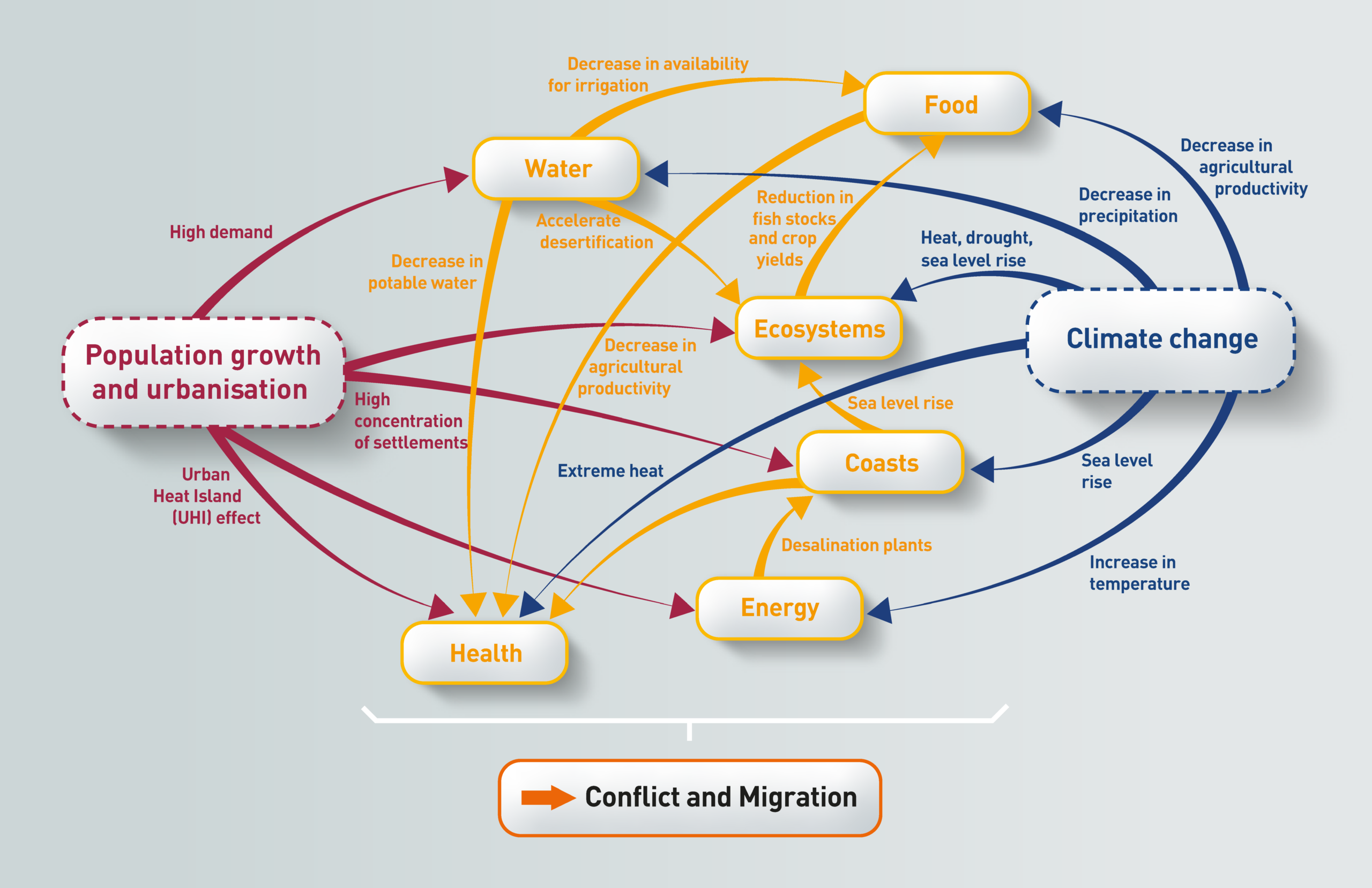
Figure ES1 | Links between climate change and socio-economic changes and their consequences for the individual sectors. The figure aims to illustrate qualitatively some of the linkages between the elements of the environmental change-migration-conflict nexus and the sectors assessed in the report. {Figure 3.12 in Section 3.7}
C. Basic facts on migration
C.1 Forms of migration
C.1.1 Human mobility and migration occur across three dimensions: (1) the decision to move, on a spectrum from fully voluntary to involuntary (forced); (2) space, in terms of the distance migrants travel within their own countries or the borders they cross; and (3) the duration of their stay away from their home location, whether seasonal, temporary or permanent. {2.1.1}
C.1.2 Disaggregating movement along the voluntary to involuntary continuum is complex. Such movement requires determining the degree of pressure to which individuals or households have been subjected because of the altered conditions, as well as the degree of freedom in making a decision to move. The terms usually associated with environmental and climate-related migration include environmentally induced migration, climate-change-induced migration, climate migrants, ecological or environmental refugees, climate displacement, distress migration, and climate refugees. {2.1.1}
C.1.3 In terms of spatial scales of migration, a distinction is made between internal migration and external migration[9]. Internal migration refers to a change of residence within national boundaries, such as between states, provinces, cities, or municipalities. External migration refers to a change of residence across national borders. International migrants can be further classified into regular immigrants who move with the permission of the receiving state, irregular immigrants who move without permission, and refugees who cross international boundaries to escape persecution. {2.1.1}
C.1.4 In terms of the duration of stay in the host region or country, permanent migration should be distinguished from temporary and seasonal migration. In the climate change context, the Conference of the Parties (COP) of the United Nations Framework Convention on Climate Change (UNFCCC) distinguishes three types of human movement: migration, a predominantly voluntary movement, displacement, predominantly involuntary, and planned relocation, voluntary or involuntary depending on circumstances. {2.1.1}
C.1.5 In the context of environmental change, there is an increasing focus on ‘trapped populations’, referring to individuals who wish to move but face constraints that prevent them from doing so. In contrast, some individuals are ‘voluntarily’ immobile, choosing to remain in their current location despite the adverse effects of environmental change because of factors such as a strong attachment to their home location or cultural reasons. {5.1.1.}
C.1.6 Migration across the Mediterranean involves individuals from Africa, the Middle East, and parts of (Western) Asia, as well as movement between (mostly) southern European Mediterranean countries. Corresponding flows are usually described and classified as ‘migration routes’ (Figure ES2) {2.2.1.1}:
- The Western African and Western Mediterranean route: from Morocco, Mauritania, Senegal, and Gambia toward the Canary Islands and mainland Spain, including also overland routes to Melilla and Ceuta.
- The Central Mediterranean route: from North Africa across the Mediterranean Sea to Italy and Malta.
- The Eastern Mediterranean and Balkans route: mostly from Afghanistan, Iraq, Pakistan, Palestine, Somalia, Syria, and Türkiye to Bulgaria, Cyprus, and Greece.
- The East African Route: from North Africa and the Middle East to Greece and Italy.
C.2 Migration as an adaptation strategy
C.2.1 Migration is considered an adaptation strategy that reduces the risks and consequences of climatic and non-climatic stressors to populations when it is voluntary, safe, and orderly. This strategy takes place at local, national, regional, and international scales. In coastal systems, different adaptation pathways have been identified to distinguish between sustainable and unsustainable adaption to environmental change (medium confidence). {6.1.1}
C.2.2 Certain adaptation pathways may become counterproductive, when practices or processes make people more, instead of less, vulnerable to environmental change. In the Mediterranean region this risk is particularly relevant in the case of displacement and involuntary (forced) migration (medium confidence). {6.1.1}
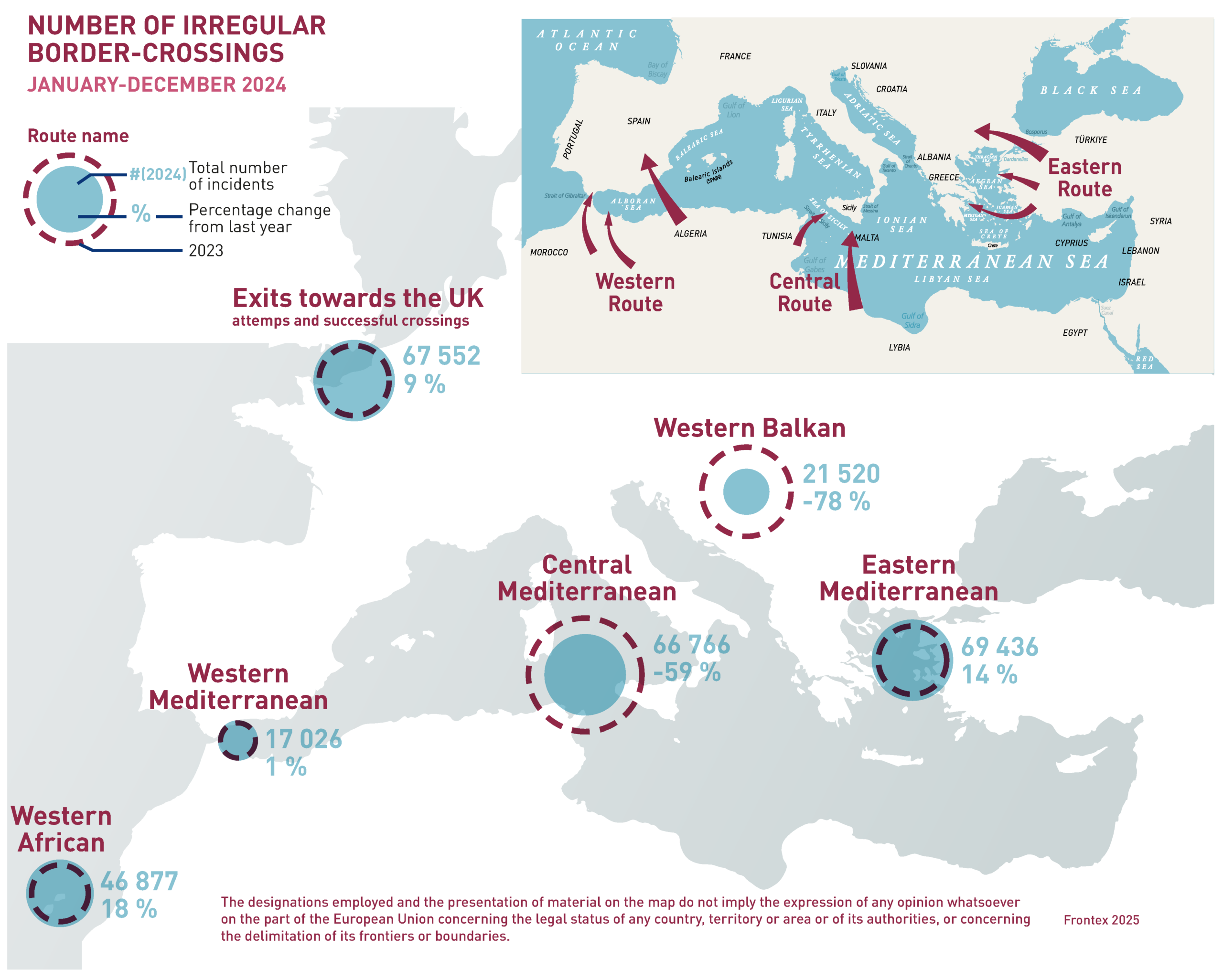
Figure ES2 | Number of irregular border crossings by migrants in 2024 via the Western-, Central- and Eastern Mediterranean Route, as well as other European migration movements. Source: FRONTEX[10]; the insert (upper right) represents schematically the major Mediterranean migration routes; source: Migration Policy Institute[11].
D.1 The environmental change-migration-conflict nexus
D.1.1 Linkages between changing environmental conditions and migration in the Mediterranean are complex and non-linear. No single theoretical framework currently provides a comprehensive understanding of the role of the environment in human The links between environmental changes and migration are highly context-dependent and strongly influenced by local socio-economic and political conditions, as well as other co-stressors (high confidence). {5.1.1}
D.1.2 According to the Foresight (2011) framework[12], the decision to migrate is influenced by five broad categories of drivers, namely environmental, social, economic, demographic, and political drivers, which constitute the macro-level (Figure ES3) {5.1.1}
D.1.3 Migration decisions are shaped not only by the complex interplay of macro drivers, but also by intervening meso-level factors, such as social networks, legal frameworks, and technology, as well as by personal and household characteristics, including age, gender, education and {5.2; 5.3}
D.1.3.1 The complexity of the issues involved, and the lack of adequate data, make it difficult to empirically assess environmental impacts on migration and to project future mobility under environmental change. Available evidence points to nuanced links between environmental and climate changes and migration in the Mediterranean The specific forms of these changes, that is, slow versus sudden onset events[13] or the effects of cumulative stressors, play a decisive role on the response of affected populations. The vulnerability of each group or community plays a decisive role in shaping the impacts of environmental changes. Often, a significant part of an affected population remains immobile, some because they donot want to leave, others because they lack resources to move, resulting in potential entrapment (medium confidence). {5.1.1} (See also Section C.1)
D.1.3.2 Empirical evidence of environmental migration on a regional scale in the Mediterranean includes North Africa and the Sahel Zone, where drought and desertification processes, together with resulting land degradation, represent considerable risk factors, particularly for the North African dryland regions (medium confidence). {5.2.1}
D.1.3.3 In the Middle East and North Africa (MENA), conflict and violence are the immediate causes of While a close relationship between environmental change and conflicts has been suggested, the hypothesis that environmental change contributes directly to instability is not supported by the currently available information. Instead, environmental factors act as additional stressors within broader socio-political contexts, where conditions such as poverty, institutional challenges, and state capacity contribute to instability. This highlights the fact that the predominant drivers leading to conflicts are existing socio-political tensions. Future environmental changes and hazards could lead to increased poverty and social instability, thereby further destabilising the region and contributing to major out-migration (medium confidence). {5.2.2}
D.1.3.4 In southeastern Europe and the Balkans, environmental changes are projected to have significant impacts on agricultural production and food security, which may increase both internal and external Important drivers are prolonged droughts, increased forest fires and land degradation, heavy precipitation and flooding events (high confidence). {5.2.3}
D.1.3.5 Climate and environmental factors are not only relevant for mobility within the Mediterranean but can also shape mobility to the (high confidence) {5.3.2}
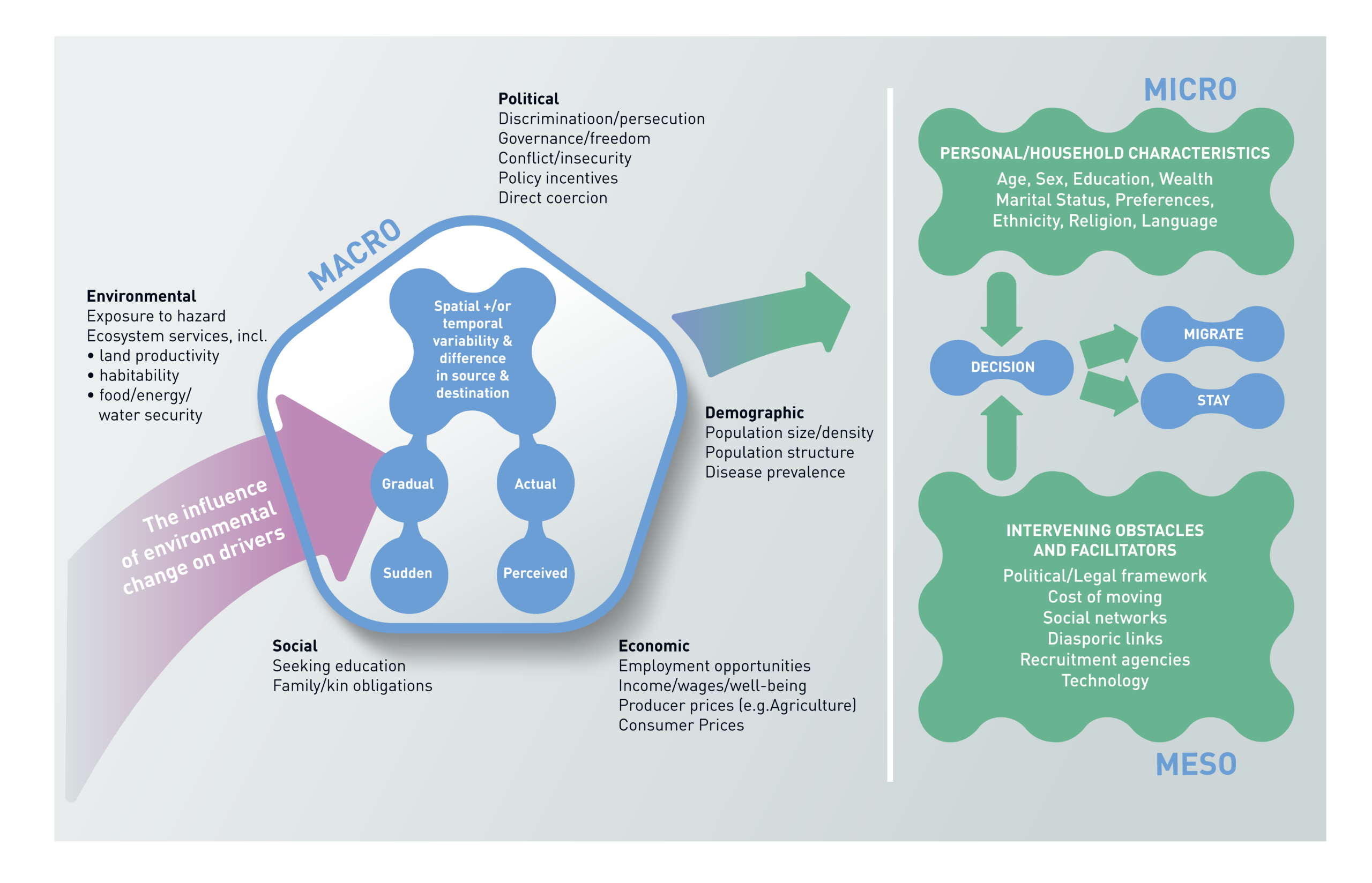
Figure ES3 | Schematic representation of the conceptual framework showing the ‘drivers’ of migration and the influence of environmental change. Source: Foresight, Migration and Global Environmental Change 2011[12]. {5.1.1
D. The environmental change-migration-conflict nexus
D.2 Environmental change and conflicts
D.2.1 The Mediterranean region, including Southern Europe and major parts of the MENA region, has historically been a hotspot for geopolitical conflicts at the intersection of three continents – Europe, Africa, and Environmental changes act as a risk multiplier, interwoven with the region’s geopolitical dimensions, posing additional stress on vital infrastructure and key economic sectors in the region (medium confidence). {4.1}
D.2.2 Research on the linkages between environmental conditions and conflicts in the Mediterranean region is limited and has resulted in contradictory Water scarcity (and possible resultant conflicts) is often linked to environmental variability and change, but may be driven more significantly by population pressure, agricultural productivity, and economic development. However, environmental changes could increase intercommunal violence, such as between herders and farmers, and among pastoralists, by affecting their coping strategies for access to water and foliage. Examination of the connections between extreme weather events, such as storms, floods or droughts, and conflicts, concludes that a direct association between such events and armed conflict remains contested. Studies which examine whether climatic events can increase the probability of inter-state conflict by reducing the supply of water in transboundary river basins lead to the conclusion that shrinking shared water resources do not necessarily lead to armed conflicts or wars. However, environmental change may contribute to tensions, threats, and even some violent episodes between local communities and riparian states. Results of several studies have shown that environmental changes could either increase inter-state conflicts or enhance cooperation, depending on the ability of the existing institutional frameworks to accommodate these changes (medium confidence). {4.2}
D.2.3 While current evidence of direct causal links remains contested, future climate change could still heighten conflict risks, although projections are subject to major However, because of methodological and data limitations, long-term conflict projections cannot incorporate the complexity and feedback loops that characterise the environment-conflict relationship (medium confidence). Simplistic modelling assumptions may distort estimates of conflict risk, in some cases driving them down. {4.3}
D.2.4 Conflicts drive migration decisions. Most research on involuntary migration concludes that displacement is an obvious consequence of emerging or ongoing conflicts, as they cause local residents to perceive an intolerable level of threat to safety and well-being, leaving no other option than to leave their homes. Conflicts can also indirectly affect migration by reducing economic opportunities. Given the resulting prospects of having to deal with insufficient income, many individuals or families choose to move. Thus, physical and economic insecurity are strong drivers of conflict-induced migration, since they entail both motivation and opportunity (high confidence). {4.4}
D.3 Vulnerability and adaptation in the vicious circle
D.3.1 Changes in environmental conditions and ongoing or emerging conflicts together increase the vulnerability of exposed societies to future environmental hazards. Conflicts have several detrimental impacts on societal development, and may thus amplify environmental risks and vulnerabilities across multiple institutional and temporal Three interrelated processes constitute a ‘vicious circle’, which locks affected societies into a structure of violence, vulnerability, and the impacts of environmental change (Figure ES4):
- Community vulnerability determines the level of risk from environmental hazards and climate change.
- Environmental-change impacts increase armed conflict risks.
- Armed conflicts heighten vulnerability to future environmental hazards.
On a more general level, it has been concluded that the compound effects of conflicts and environmental hazards are likely to amplify the vulnerability of exposed societies. This may lead to a cascade of temporally- and spatially-dependent risks, which might mutually reinforce and increase societal vulnerability to future hazards (medium confidence). {4.5}
D.3.2 Effective adaptation plans and initiatives can help to reduce conflict risks by countering the effects of environmental changes on natural resources, food and water security, livelihoods, and economic Adaptation and mitigation policies may reduce the conflict potential of climate variability and environmental change, but they carry the risk of unintended negative effects, which need to be addressed in advance. Environmental adaptation initiatives may foster cooperation between states, but they may increase the risk of conflict between them, if poorly designed or if critical competing interests are not adequately considered. For instance, infrastructure projects such as dams or dykes may affect relationships between upstream and downstream states, as in the Nile River basin, where both cooperative and conflicting interactions have occurred (medium confidence). (See also Section C.2) {4.5}
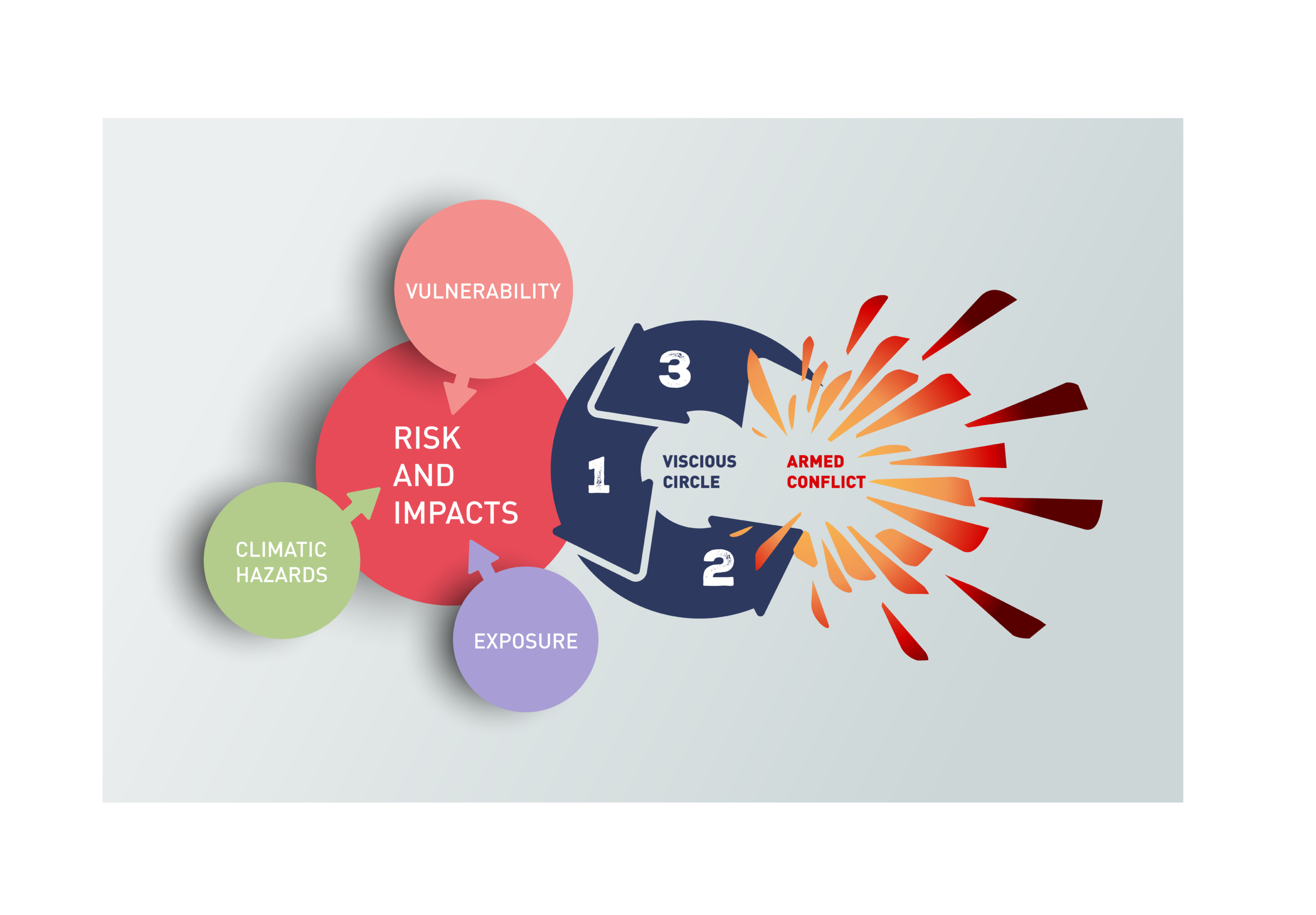
Figure ES4 | Conceptual diagram illustrating the ‘vicious circle’, which locks affected societies into a structure of violence, vulnerability, and the impacts of environmental change. {Figure 4.2 in Section 4.5}
D.4 Environmental change - migration - conflicts
D.4.1 Current evidence does not support a strong direct causal link between environmental change, conflict, and migration. Lack of coordinated and supportive governance structures for migration and adaptation is a key factor driving the relationships between environmental hazards, the impacts of environmental change, conflict, and migration. While interactions and dynamics that constrain effective policies operate on various scales, the most relevant and effective response mechanisms consist in community-based and location-specific measures (medium confidence). {6.1}
D.4.2 While migration is increasingly discussed as a form of adaptation to environmental change, current evidence highlights that it tends not to be a sustainable adaptation strategy, but rather a coping mechanism at Migration is a highly socially demanding process, and not a mere functional option for people facing environmental change and conflicts. Depending on the existing political and economic institutions, the influx of migrants may also increase conflict risks and lower the adaptive capacity of host communities and countries, by intensifying resource scarcity, socio-political unrest, and turning climate into a security issue (securitisation)[14] (medium confidence). {6.1}
D.4.3 International human rights law does not expressly recognise any environmental or climate-related reasons for migration that would result in legal protection. Consequently, individuals forced to leave their home country because of the unbearable impacts of environmental change are rejected by potential host countries. This follows the contention by host communities that migrants should not be considered under international legal regimes, including the Convention relating to the Status of Refugees, and they therefore lack legal Despite various initiatives and a few rulings connecting migration, environmental risks, and human rights, the prospects of providing legal protection for migrants (e.g. climate refugees) remain dim (high confidence). {6.3}
D.4.4 Place-based vulnerabilities of communities and individuals are central to the environmental change-migration-conflict nexus. For vulnerable communities that lack adaptive capacity, migration might not be an available option and may instead lead to (involuntary) immobility (medium confidence). (See also Section C.1) {6.4}
D.4.5 Intersectional structural inequalities that already permeate Mediterranean societies and economies also shape the complex realities of the environmental vulnerability-migration-conflict nexus. These inequalities, which are distributed unevenly across northern and southern Mediterranean countries, are restructured by environmental change based on ethnicities, racialised groups, gender identities, age groups, abilities, and classes, both within and between communities (medium confidence). {6.5}
Intersectional structural inequalities in the context of environmental variability shape the:
- likelihood of mobility and immobility as a result of environmental change;
- routes and conditions of mobility;
- adaptive capacity associated with mobility and/or immobility.
D.4.6 There is a rural to urban migration trend, which is exacerbated by climate-induced water scarcity (medium confidence). Gender and age inequalities shape this process: women and the elderly in rural areas are often left behind, a pattern referred to as the ‘masculinisation of migration’. However, there are also cases of women migrating in the face of climate Housing opportunities at the destination and land tenure, alongside education, determine migration prospects and routes for men and women.

E. Knowledge gaps and future outlook
E.1 Knowledge gaps
E.1.1 While environmental change has been characterised as a ‘threat multiplier’, quantifiable and direct relationships between environmental change, conflict, and migration are complex and nonlinear, making it a challenge to identify causality across the nexus (high confidence). {7.1; 7.5.1}
E.1.2 Multiple and direct causal relationships between conflict and migration have been established for the Mediterranean Basin (and beyond). However, a more comprehensive understanding of the relationship between environmental change and conflict is still lacking, as the relationship is more complex and lacks quantifiable data to establish direct causality (high confidence). {7.3}
E.1.3 The lack of sufficient empirical studies and interdisciplinary dialogue, combined with methodological shortcomings and difficulties accessing data, limit our understanding and a quantifiable description of the complexity of the environmental change-migration-conflict nexus (medium confidence). {7.3}
E.1.4 The breadth of variables, combined with wide socio-economic, political, and institutional disparities across Mediterranean Basin states, as well as the long timeframe and large spatial and temporal scales needed to quantify and test causality across the environmental change-migration-conflict nexus, add methodological complexity in specifying realistic and effective policy measures for the Mediterranean Basin. Given this diversity, sub-regional approaches may be preferable (i.e. East Mediterranean, West Mediterranean) compared to broader frameworks seeking to apply ‘one-size-fits-all’ approaches to the whole Mediterranean Basin (high confidence). {7.3}
E.2 Way forward
E.2.1 The complexity of the issues addressed requires a broad multidisciplinary approach, involving the natural and human sciences on an equal footing, in order to gain a more comprehensive understanding of the environmental change-migration-conflict nexus (high confidence). {7.4.1}
E.2.2 In order to better understand the current impacts of environmental change on migration and to project future mobility under similar conditions, it is crucial to significantly improve the empirical database, enhance interdisciplinary collaboration, and strengthen the science-policy interface (and possibly science-diplomacy) across all relevant fields and sectors (high confidence). {7.4.4}
E.2.3 Greater involvement of local civil society in developing and implementing place-based research is fundamental. Communicating scientific data and results through an effective science-policy interface is essential in addressing the challenges of the environmental change-migration-conflict nexus (high confidence). {7.4.2}
E.2.4 Addressing the root causes of the socio-economic and political vulnerability of states and societies in the Mediterranean Basin is fundamental to improving adaptive capacity and promoting transformative strategies for communities and regions. This includes a direct focus on human rights, good governance, and developmental practices across states and societies in the Mediterranean Basin. {7.4.1}

Footnotes
[1] Although outside the Mediterranean Basin, numbers reported include movements from West African countries towards the Spanish Canary Islands as part of Mediterranean migration statistics.
[2] Mediterranean Refugees/Migrants Data Portal, United Nations High Commissioner for Refugees (UNHCR), https://data.unhcr.org/en/situations/europe-sea-arrivals. Accessed 1 March 2025.
[3] The Mediterranean Basin comprises the semi-enclosed Mediterranean Sea and the countries and regions bordering it in Africa, Asia and Europe.
[4] See, for example, McAuliffe & Oucho (eds.), World Migration Report 2024 (IOM, Geneva). https://publications.iom.int/books/world-migration-report-2024
[5] See: https://missingmigrants.iom.int/region/mediterranean
[6] The term ‘migrant’ is used in this report to refer collectively to individuals and groups who voluntarily or involuntarily leave their homes to find new homes in either their country of origin (internal migrants), or in a country across borders (cross-border or external migrants), including asylum seekers and refugees, terms that are not mutually exclusive, but may overlap strongly.
[7] In this Analysis, the term ‘environmental change’, if not explicitly stated otherwise, is used to refer to changes in terrestrial and marine ecosystems as well as changes in climate conditions at local, regional or global scales.
[8] Although this Analysis focuses primarily on the Mediterranean region, it also draws on data from the Mediterranean Basin (see footnote 3), the Eastern Mediterranean and Middle East (EMME), and the broader Middle East and North Africa (MENA) region (also referred to as Southern and Eastern Mediterranean Countries (SEMC). In this Analysis, the MENA region refers specifically to countries bordering or closely connected to the 10 Mediterranean Sea
[9] While the term ‘international migration’ is frequently used, the term ‘external migration’ is used in the report.
[12] https://www.gov.uk/government/publications/migration-and-global-environmental-change-future-challenges-and-opportunities 20 14 While the term ‘rapid onset event’ has been used at places in the underlying report, the preferred term is ‘sudden onset events’. Sudden onset events represent a sub-group of rapid onset events and take place at a much faster rate of years to a few decades, which is more appropriate than the longer timescales of decades to several centuries that apply to rapid onset events.
[13] While the term ‘rapid onset event’ has been used at places in the underlying report, the preferred term is ‘sudden onset events’. Sudden onset events represent a sub-group of rapid onset events and take place at a much faster rate of years to a few decades, which is more appropriate than the longer timescales of decades to several centuries that apply to rapid onset events.
[14] The concept of “securitisation” is used in this Analysis as defined in international relations and political science, particularly within the framework of the Copenhagen School (Buzan et al., 1998). Securitisation refers to the process through which an issue is constructed as an immediate and existential threat by a powerful actor—such as a government or political leader—through a speech act. This construction must be accepted by a relevant audience to legitimise the use of extraordinary measures beyond normal political procedures. As used in this Analysis, securitisation concerns the construction of issues as security threats, not the financial meaning of the term (i.e. the pooling and repackaging of assets into tradable securities). {6.2}

How to cite the report
Contributors
Editors

Manfred A.
Lange
Cyprus Institute / Cyprus

Roula
Majdalani
ICARDA-One CGIAR / Lebanon

Wolfgang
Cramer
IMBE, CNRS / France

Joël
Guiot
CEREGE, CNRS / France

Salpie
Djoundourian
Lebanese American University / Lebanon

Piero
Lionello
University of Salento / Italy

Julie
Gattacceca
MedECC Secretariat / France
GREC-SUD Association / France

Katarzyna
Marini
MedECC Secretariat / France
Plan Bleu / France
Report Coordinators
Coordinating Lead Authors
Manfred A.
Lange
Cyprus Institute / Cyprus
Roula
Majdalani
ICARDA-One CGIAR / Lebanon

Eda
Acara
Istanbul Policy Center (IPC) / Türkiye
Futurecraft / Canada

Audrey
Brouillet
Potsdam Institute for Climate Impact Research (PIK) / Germany

Çağdaş
Dedeoğlu
Yorkville University / Canada

Andrea
Dessì
The American University of Rome (AUR) / Istituto Affari Internazionali (IAI) / Italy

Roman
Hoffmann
International Institute for Applied Systems Analysis (IIASA) / Austria

Vally (Vassiliki)
Koubi
University of Bern / Switzerland
Swiss Federal Institute of Technology Zurich (ETH) / Switzerland

Lena
Reimann
Aalto University / Finland
Jürgen
Scheffran
University of Hamburg / Germany

Jan
Wilkens
German Institute for Global and Area Studies (GIGA), University of Hamburg / Germany