
The Mediterranean is one of the world’s most climate-vulnerable regions, and the science that documents this vulnerability has never mattered more. MedECC, the Mediterranean Experts on Climate and Environmental Change, is now inviting researchers and scientific experts to join the external review process of its Second Mediterranean Assessment Report (MAR2). If your work touches on climate, environment, or socio-economic change in the Mediterranean Basin, then this is your opportunity to help ensure that the region’s most comprehensive scientific assessment reflects the best available knowledge.
Why does MAR2 matter?
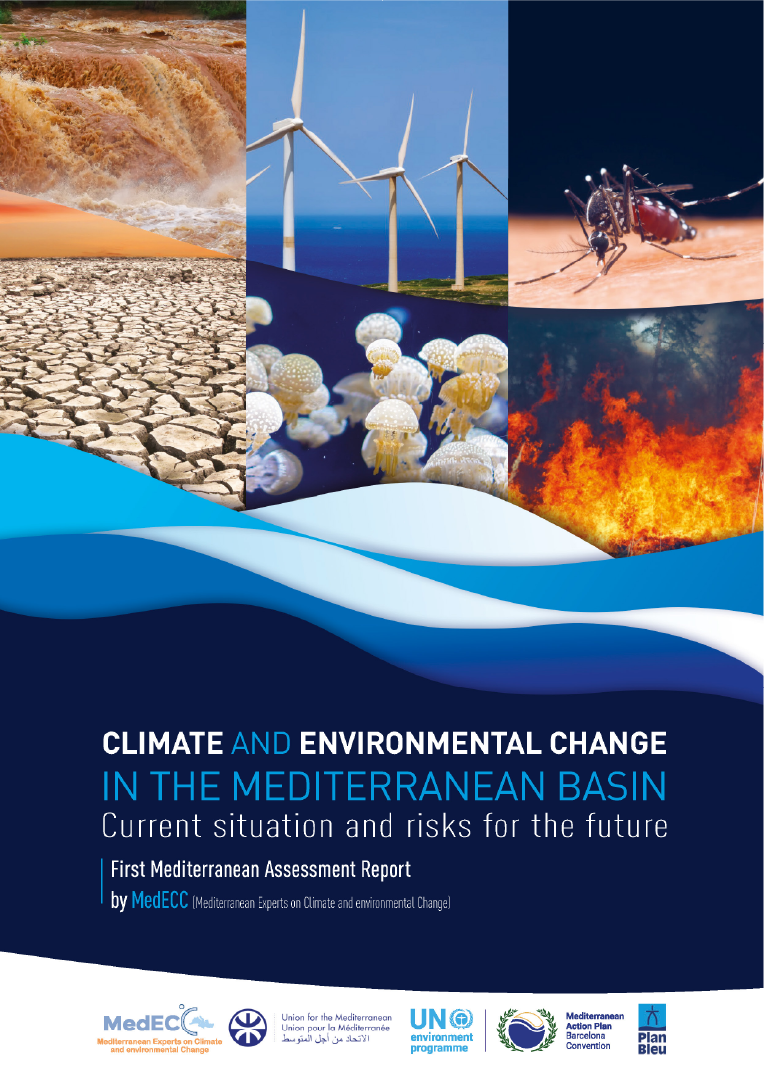 The First Mediterranean Assessment Report (MAR1), published in 2020, established a landmark baseline for regional climate science. Today, MAR2 builds on this foundation, but goes further. It addresses gaps identified in MAR1, particularly in social sciences, adaptation and mitigation policies, and governance. MAR2 is designed to be not just an update but a step-change in the depth and breadth of Mediterranean climate science. Publication is scheduled for 2028.
 MAR 2 is backed by EU funding through the Climate Action Package for the Southern Neighbourhood (CAP-Med), coordinated by the European Commission’s DG MENA, implemented via Plan Bleu, and supported by UNEP/MAP and UfM through SIDA funding.
A report built on seven pillars
Did you know that MAR2 is structured around seven thematic chapters, developed by more than more than 70 scientists from 18 countries ?
1.Framing the Mediterranean climate challenge: polycrisis narrative, lessons from MAR1, governance diversity
2.Drivers of change: socio-economic pressures, projected climate shifts, compound risks and extreme events
3.Impacts and risks on human and natural systems: cascading risks, inequality, sectoral interdependence
4.Adaptation options and enablers: systemic, community-led, technological and institutional responses
5.Mitigation and decarbonisation: emission reduction pathways, nature-based solutions, trade-offs and co-benefits
6.Policies, governance, economic instruments, and financing transitions: tools for transformative climate action
7.Societal transformation for a sustainable future: long-term systemic change across societies and institutions
This multidisciplinary architecture reflects MedECC’s commitment to producing knowledge that is both scientifically rigorous and policy-relevant across the full complexity of the Mediterranean world.
For a full overview of the MAR2 structure and contributing authors, download the outline and contributors document.
MedECC reports go through several drafts and reviews to ensure it is as robust, comprehensive and balanced as possible. Authors have prepared a first draft which will be open for experts to review and provide comments.
Why this review matters, and why your voice should be in it
External review is not a formality. It is the mechanism through which a scientific assessment earns its credibility. Reviewers challenge assumptions, identify knowledge gaps, flag missing literature, and ensure that findings hold up to scrutiny from across disciplines and geographies. In a region as diverse as the Mediterranean, stretching from Morocco to Türkiye, from the Adriatic coast to the Sahel fringe, no single author team can hold all the expertise the report requires.
If your research touches on Mediterranean climate dynamics, biodiversity, water, food systems, coastal risks, migration, energy transitions, governance, or socio-economic vulnerability, your contribution to this process has real value. The decisions that MAR2 will inform: from national adaptation plans to EU neighbourhood policy to COP negotiations, will affect millions of people across the region. The science behind those decisions should be as robust as possible.
That robustness depends on you.
The call for external reviewers: what you need to know
Following an internal review of the Zero Order Draft in January 2026, the author team is now finalizing the First Order Draft (FOD). The external peer review of this draft is set to begin in July 2026 and will run for approximately eight weeks.
MedECC is calling on researchers across scientific, technical, and socio-economic disciplines to apply as external reviewers. The process is transparent, structured, and iterative, modelled on the rigorous approach used by the IPCC. For a detailed overview of the review process, download the information note.
Who can register? The call is open to PhD holders and other experts with demonstrated expertise in the thematic areas covered by MAR2. You do not need to review the entire ~500-page report, reviewers are invited to focus exclusively on the sections relevant to their field.
What do you get in return? Every contributing reviewer will be formally acknowledged in the final published report, recognizing your contribution to one of the most significant regional climate assessments of the decade.
How to register? Complete the online registration form.
If you cannot access the online form contact the MedECC Secretariat at contact@medecc.org.
Register before 15 July 2026.
For more information on the MAR2 structure and author team, visit medecc.org/mar2-chapters-and-authors.
Questions about the review process? Contact the MedECC Secretariat at contact@medecc.org.