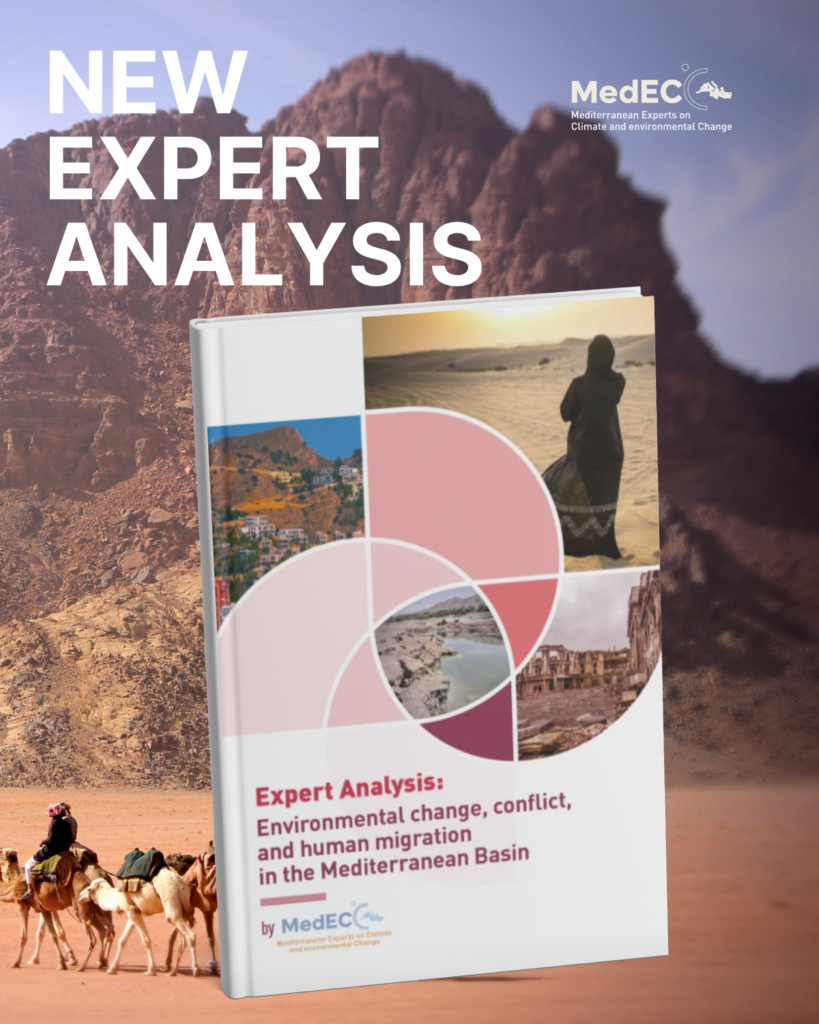
As the Mediterranean Basin faces growing environmental, geopolitical and migration pressures, the MedECC network has published a comprehensive expert analysis examining the links between environmental change, conflict, and human migration in the Mediterranean.
Based on more than 1000 scientific publications and compiled by 49 experts from 20 countries, the analysis follows a rigorous process inspired by IPCC standards. It aims to improve understanding of the drivers, trends and impacts of human migration across the Mediterranean region, while supporting evidence-based policies that can reduce human suffering, improve resource allocation and strengthen regional stability.
A climate, geopolitical, and migratory hotspot
The Mediterranean region is subject to three simultaneous pressures: it represents a global epicenter of environmental change, a region marked by historical geopolitical instability, and a major migratory crossroads. While climate change is a central dimension, the expert analysis considers broader environmental changes in the Mediterranean by also accounting for non-climatic drivers. The Mediterranean is warming faster than the global average. Southern and eastern countries are already suffering from severe water stress, simultaneously threatening food security and energy systems.
From armed conflicts to “trapped populations”: rethinking migration
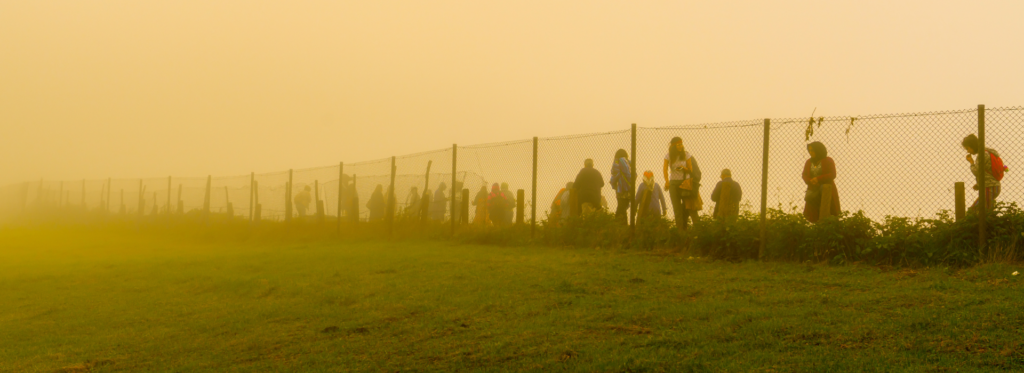
The report offers a more nuanced perspective on the dominant narrative: often environmentally induced displacement occurs within national borders, primarily from rural areas to cities, rather than through the international crossings that dominate public debate. However, dangerous cross-border migration remains a significant concern. Between 2014 and 2024, more than 30,000 people were recorded as having died or gone missing at sea, a humanitarian tragedy that demands urgent political action. In the MENA (Middle East and North Africa) region, conflict, political instability, socio-economic conditions and governance issues often remain stronger drivers of forced and cross-border displacement than environmental factors alone. Environmental change is not the direct and exclusive cause of conflict, but it acts as a risk multiplier, amplifying pre-existing vulnerabilities and inequalities. A vicious circle takes hold: vulnerability, conflict, and displacement feed one another. One reality remains largely overlooked: that of “trapped populations”, those who wish to leave but lack the means to do so.
Insights from the MedECC experts
The MedECC report underscores the limitations of a purely security-based approach to migration and climate adaptation in the Mediterranean region, pointing instead to the importance of development and regional cooperation. Several priority areas emerge from this report:
- Strengthening climate adaptation policies in the countries of the southern and eastern Mediterranean, particularly regarding water, sustainable agriculture, and green infrastructure;
- Addressing legal gaps concerning the protection of environmentally displaced persons, who are currently excluded from international refugee protection frameworks;
- Investing in interdisciplinary research and improving empirical databases to better understand and anticipate environmental migration dynamics at the regional level.
MedECC emphasises that scientific knowledge is already available to inform action, while further research and regular updates remain necessary. Delayed responses may worsen the living conditions of millions of people in a region already strongly affected by climate change and by other environmental, social, economic and political pressures.
The analysis was developed during an escalation of violence in the region, which has continued after its completion with severe humanitarian and environmental consequences. New evidence is emerging on the environmental impacts of conflict and forced displacement, confirming the need to update assessments as conditions evolve.
The report therefore calls for timely, evidence-based and cooperative responses to a reality that is changing rapidly.